
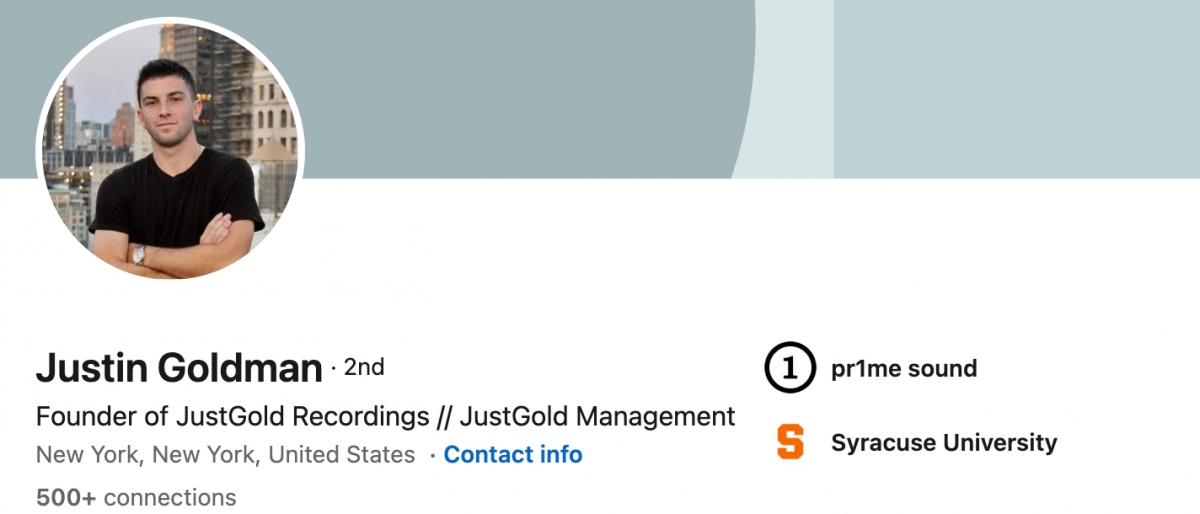
Justin Goldman proudly displays his Forbes 30 Under 30 honor on his public profiles, including his Instagram account. The New York-based music and entertainment executive positions himself as a rising star in the industry. Yet behind the glossy bio lies a different story. It’s one of repeated broken promises, delayed payments, and bad-faith tactics that ultimately led to a court judgment against him.
At Heitner Legal, we secured two substantial copyright infringement settlements for Goldman in 2025. He signed a clear contingency-fee engagement letter promising us a commission on any pre-suit recoveries. We delivered. He received the full amount of settlement funds. Then he simply refused to pay the money he owed us.
This is not just a dispute over a bill. Such a dispute would not warrant a blog post. Instead, this special situation is a textbook example of why every lawyer must perform client diligence before taking on a matter and why contingency fees should be held in a trust account whenever possible.
The Engagement and the Work We Performed
In 2025, Justin Goldman signed our engagement letter. It explicitly stated that Heitner Legal would receive a commission of any pre-suit settlement obtained after we sent a demand letter. Goldman provided us with a “Comprehensive Demands and Communications Status Report” identifying targets, including two that we resolved quickly and efficiently.
We earned our commission. Goldman acknowledged that we earned our commission and thanked us for our work. Goldman received every penny of the settlements. He acknowledged the debt repeatedly in writing.
The Broken Promises – A Pattern of Delay and Bad Faith
From October 2025 through March 2026, Goldman’s communications followed a predictable cycle: acknowledgment → promise → delay → excuse → threat.
Here are some of the most revealing statements, taken directly from his own emails and texts:
- October 28, 2025 (via his business manager Elijah Elmore): “Apologies for the late response. Please confirm the total is $17,500 and we’ll get this out shortly.”
- November 3, 2025 (Goldman personally): “The firm’s contingency share of [redacted] is being paid on a Net-30 basis, consistent with my standard payment schedule. Payment is already in process, and I’ll confirm once it clears… I understand my obligations and I’m not contesting any payment.”
- December 4, 2025: “I’ll get this sorted out shortly.”
- December 9, 2025 (after we threatened to file suit): “I will either have counsel handle this or the payment will be initiated on Monday… Payment will be initiated Monday or counsel will handle this going forward.”
Even after we filed suit on December 16, 2025, obtained a default, and secured a Final Default Judgment on February 4, 2026 for the full $17,500 plus post-judgment interest, Goldman continued the same pattern.
In late February 2026, once the judgment was served, he tried to negotiate a payment plan. Goldman agreed to pay $3,000 by March 10, $7,000 by April 1, and $7,500 by April 15.
He failed to make the first payment on time. When pressed, he claimed Zelle limits prevented him from sending more than $1,000. We offered reasonable accommodations. The pattern continued.
Why This Matters: Lessons for Every Lawyer
- Perform Real Client Diligence. Before accepting a contingency matter, especially one involving large expected recoveries, verify the client’s reputation for paying professionals.
- Use a Trust Account – Don’t Let the Client Receive the Money First. Had the settlement funds been wired to Heitner Legal’s trust account, we could have disbursed Goldman’s share and retained our earned fee immediately. Instead, we trusted Goldman to pay us after he received the money. That was a mistake we will not repeat.
- Document Everything. Goldman’s own words, captured in emails and texts, proved decisive in obtaining a swift judgment. Every promise, every acknowledgment, and every delay is now part of the public court record (Case No. COCE25-087725, Broward County Court).
We now have a final, enforceable judgment against Justin Goldman. We intend to collect it aggressively through all available means under Florida law, including garnishment, liens, and credit reporting. We take no joy in this outcome. We simply expect to be paid for the work we performed.
Final Thought
Forbes 30 Under 30 is an impressive honor. It does not, however, excuse failing to honor clear contractual obligations to the professionals who helped you achieve your success. If you are a lawyer reading this, take the time to vet your clients. Put protective language in your engagement letters. And whenever possible, route settlement proceeds through your trust account.