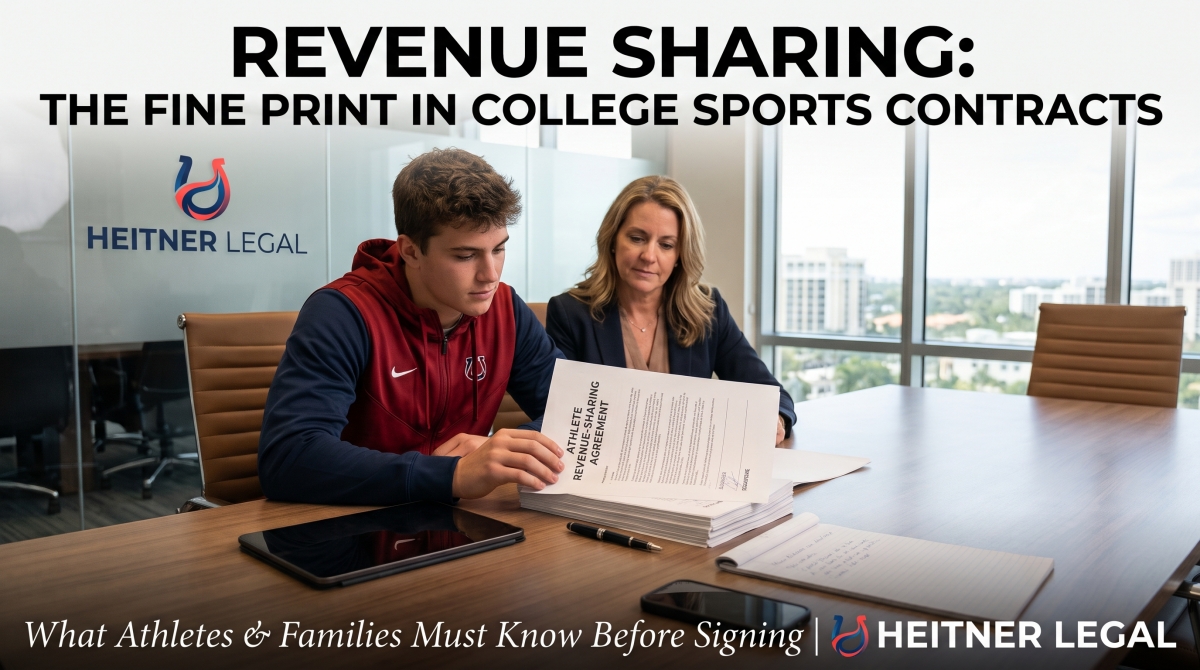
For many college athletes, a revenue-sharing agreement is the largest contract they have ever been asked to sign. It is often the largest contract their parents have ever reviewed, too.
The offer usually arrives fast. A collective or athletic department sends a PDF, attaches a payment schedule, and asks for a signature before a deadline that seems designed to prevent careful reading. The dollar figure on the first page gets all the attention.
The dollar figure is rarely the whole story. What an athlete actually receives depends on when payments are made, what triggers a reduction or a repayment, what happens if the athlete transfers, and which rights the athlete gives up in exchange. Those terms sit in the body of the agreement, and not on the cover page.
I have reviewed and negotiated these agreements on behalf of athletes across Power Four programs since the first revenue-sharing contracts were issued in 2025. This post explains how revenue sharing works today, the clauses that most often decide what a deal is worth, and what families should look for in a lawyer before signing. Feel free to contact us for more information.
How revenue sharing works in 2026-2027
The House v. NCAA settlement, approved in 2025, allows participating schools to pay athletes directly. Each school may distribute up to 22% of the average media, ticket, and sponsorship revenue of the major conferences. The cap was $20.5 million per school for 2025-26 and is estimated at $21.3 million for 2026-27, according to the College Sports Commission.
Most of these payments are structured as a license of the athlete’s name, image, and likeness to the school. That framing matters, because it means the agreement is, at least according to the institution, not simply a payroll promise. The contract attempts to establish that it is a rights grant with conditions attached.
Two systems sit on top of the contract:
- CAPS. Schools must report revenue-sharing payments in the College Athlete Payment System within five business days of final signature, so the school tracks every dollar against its cap.
- NIL Go. Third-party NIL deals, including deals with collectives and brands that a school helps arrange, go through College Sports Commission review. A third-party deal that is not cleared can create eligibility problems, and many revenue-sharing agreements make the athlete responsible for that clearance.
As of this post’s publication, the rules are still moving. The Protect College Sports Act passed the Senate 77-22 and awaits its fate in the House, and state NIL laws continue to change. Conferences such as the Big Ten and SEC are also contemplating their own rules with potentially much higher caps on revenue-sharing arrangements. A well-drafted agreement anticipates that change. A poorly drafted one leaves the athlete carrying the risk.
The clauses that decide what the deal is worth
These are the terms I negotiate most often. Each one can move the real value of an agreement by more than the headline number.
- The payment schedule versus the body of the contract. A schedule may list two seasons and a combined total, while the body allows the school to end the deal after one. If the two documents disagree, families need to know which controls before signing.
- Buyouts and repayment. Many agreements require the athlete to repay money, sometimes with interest or a liquidated damages figure, if the athlete enters the transfer portal or leaves early. Some buyouts run only against the athlete and never against the school.
- Termination rights. Look at who can end the agreement and why. Broad language such as “conduct detrimental” or “failure to meet team expectations” can give the school a way out that the athlete does not have.
- Roster and scholarship conditions. Payment may depend on staying on the roster or remaining eligible. If an injury or a coaching change takes away playing time, the agreement should say whether the money stops.
- The NIL rights grant. The license can be exclusive, perpetual, or broad enough to cover the athlete’s group licensing, personal brand deals, and even content created after college. Narrowing the scope protects future earnings.
- Third-party deal restrictions. Some agreements require the school’s approval for outside endorsements or bar entire product categories. That can block a deal worth more than the revenue share itself.
- Clearance and compliance obligations. If the agreement makes the athlete responsible for NIL Go clearance or for any rule change that reduces payment, the athlete is absorbing risk the school controls.
- Dispute resolution. Arbitration clauses, venue in the school’s home state, and fee-shifting provisions decide how expensive it will be to enforce the deal if something goes wrong.
None of these terms is unusual on its own. The problem is that they are drafted by the school’s lawyers to protect the school, and most athletes sign without anyone on their side reading them.
Red flags for parents
Parents often ask what should worry them. These are the signs that an agreement needs a lawyer’s review before anyone signs:
- A signing deadline of a day or two, with no explanation for the rush.
- A headline amount that appears only in a schedule or an email, not in the agreement itself.
- Any repayment or buyout obligation that applies if the athlete transfers.
- A rights grant described as exclusive, irrevocable, or perpetual.
- Language that lets the school reduce or stop payments in its “sole discretion.”
- A requirement that the athlete waive claims, keep the terms confidential from family or advisors, or use a particular agent.
- References to policies, handbooks, or exhibits that were not attached.
An agent can help find the best opportunity. Reviewing the contract itself, explaining the legal consequences of each clause, and negotiating the language is legal work.
Why families choose Heitner Legal
When you hire a lawyer for a revenue-sharing agreement, you are hiring judgment about a market that is barely two years old. Here is the record behind ours:
- Two decades in the athlete business. I founded the Sports Agent Blog in 2005 and Heitner Legal in 2014. I started practicing law in 2010. Heitner Legal negotiates contracts for athletes, agents, and brands every day.
- Involved in NIL law from the start. I helped shape Florida’s NIL law, signed in 2020, and I have testified before Congress on college sports on multiple occasions.
- Teaching and writing on the subject. I teach Sports Law and NIL at the University of Miami School of Law. I wrote the ABA’s How to Play the Game: What Every Sports Attorney Needs to Know, now in its third edition, and I publish the weekly Newsletter, Image, Likeness, on these developments.
- Recognized for the work. Front Office Sports named me “The Lawyer Steering the NIL Era” in 2026.
- Litigation capability. Heitner Legal has secured eligibility relief for many college athletes. The firm has also handled multiple disputes over the enforceability of liquidated damages provisions. If a school does not honor an agreement, the firm that negotiated it can also enforce it.
- Contracts at the programs that matter. I have reviewed and negotiated revenue-sharing agreements for athletes at Power Four programs, which means I know what schools have agreed to change and where they will not move.
The right lawyer for your family is one who reads the whole agreement, explains it in plain English, and negotiates it before the deadline. That is the work we do every week.
Prior results do not guarantee a similar outcome.
What a review includes and how to start
A revenue-sharing review with Heitner Legal covers:
- A full read of the agreement, the payment schedule, and every policy or exhibit it references.
- A plain-English summary for the athlete and family of what the agreement requires and what it actually pays.
- A marked-up draft with proposed revisions to the terms that matter most.
- Direct negotiation with the school or collective, if the family wants us to handle it.
- A check of how the agreement interacts with third-party NIL deals and NIL Go clearance.
We work with athletes and families nationwide, and the review can usually be completed before a signing deadline. Families typically prefer when we quote a flat fee for review and an hourly rate for negotiation, which we are happy to do.
Have an offer in hand? Contact Heitner Legal and send the agreement with your deadline. We will tell you what we see and what the review will cost before any work begins.
Frequently asked questions
Do I need a lawyer to review a college revenue-sharing agreement? No law requires one, but the school’s agreement was written by lawyers who represent the school. Having your own lawyer is the only way to know what you are giving up and to negotiate better terms.
Can a revenue-sharing agreement be negotiated? Yes. Payment timing, buyouts, termination rights, and the scope of the NIL license are often negotiable, especially for athletes a program is actively recruiting or trying to keep.
What happens to my revenue-sharing money if I transfer? It depends on the agreement. Many contracts stop future payments, and some require repayment of money already received. Read the transfer and buyout provisions before signing.
Is a revenue-sharing payment the same as an NIL deal with a collective? No. Revenue sharing is paid by the school and counts against its cap. Collective and brand deals are third-party NIL agreements that go through College Sports Commission review in NIL Go.
Can my agent review the contract? An agent can advise on market value and opportunities. Interpreting the legal effect of contract terms and negotiating the language is legal advice, which should come from a licensed attorney.
How long does a review take? Most reviews can be completed within a few days, and faster when a signing deadline requires it.
This post is general information, not legal advice for any specific situation, and reading it does not create an attorney-client relationship.