
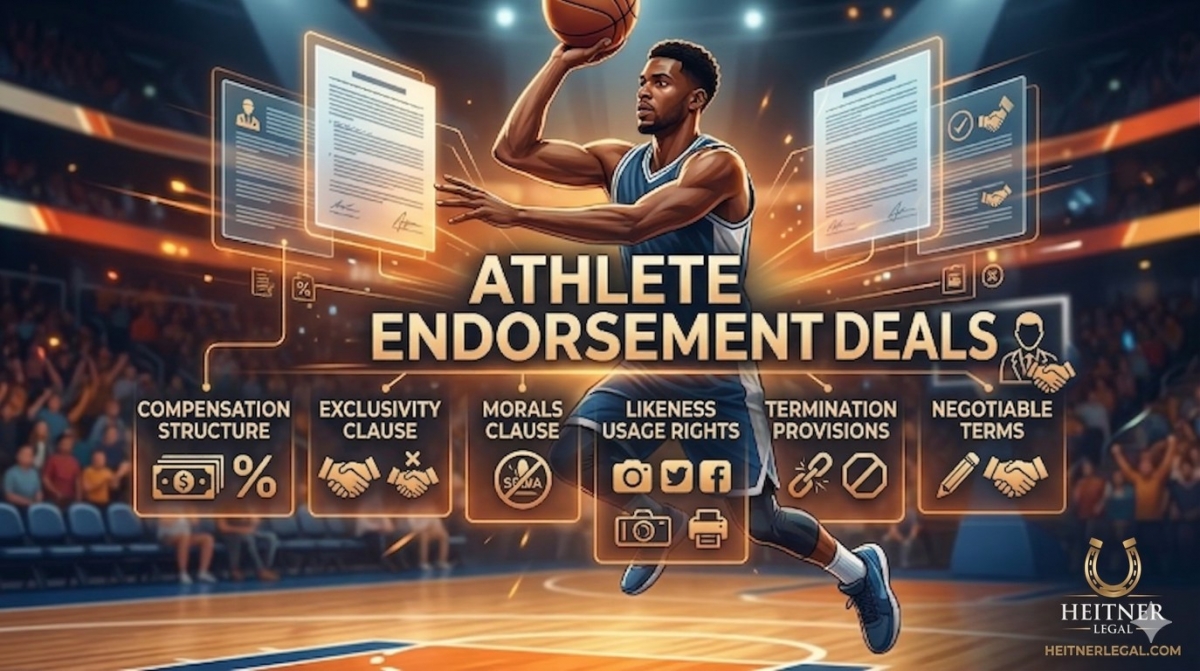
Endorsement deals represent some of the most consequential contracts an athlete will ever sign, and they are also among the most misunderstood. The excitement of a brand partnership can cloud judgment at exactly the moment clear thinking is most needed. Whether you are a college athlete entering your first NIL deal or a professional preparing to execute a multi-year arrangement with a national brand, the terms you accept at the outset will define your obligations, your exposure, and your ability to walk away if things go wrong.
The exclusivity provision is the first place I tell athletes to focus. Brands want protection. They do not want to pay for your association only to see you appear in a competitor’s campaign the following week. Exclusivity clauses can be narrow, limited to a specific product category, or sweeping, covering entire industry verticals. A poorly negotiated exclusivity provision can effectively foreclose your ability to take on other deals for the duration of the agreement. Before agreeing to any exclusivity, you need to understand how long it runs, what categories it covers, and what compensation you are receiving in exchange for that restriction on your commercial activity.
Compensation structure is more than a dollar figure. Base fees, performance bonuses, royalties, equity stakes, and appearance fees all represent different economic arrangements, and each carries different tax and financial planning implications. I have seen contracts that promised athletes substantial sums up front while burying the real value in contingent bonuses that were practically impossible to trigger. When you review compensation terms, read the payment schedule carefully, understand what obligations must be fulfilled before each payment is released, and determine whether the deal includes any revenue-sharing component tied to sales or engagement metrics.
The morals clause deserves particular attention. Virtually every endorsement agreement includes one, and the language varies enormously. At its most aggressive, a morals clause gives a brand the right to terminate the agreement and, in some cases, claw back payments already made, based on conduct the brand determines, in its sole discretion, to be inconsistent with its values or damaging to its reputation. The scope of that discretion matters. A well-negotiated morals clause is mutual: if the brand itself becomes embroiled in scandal, the athlete should have the same right to exit. Athletes who sign broad unilateral morals clauses without negotiating reciprocal protections are accepting significant risk with little recourse.
Likeness usage rights determine where and how your name, image, and voice can appear for the term of the agreement. The brand will want broad rights across all media, including digital, print, broadcast, out-of-home, and social platforms. You need to know whether you have retained any approval rights over how your likeness is used, what the territorial scope of the deal is, and whether your image can be associated with messages or secondary products you have not specifically endorsed. Post-term usage rights are also worth negotiating. Some contracts permit brands to continue using existing creative materials featuring the athlete for months or years after the agreement expires, which can create conflicts with future partnerships.
The termination provisions and dispute resolution clauses govern what happens when the relationship breaks down, and it often does. One-sided termination rights that allow the brand to walk away for any reason, with minimal notice and no further payment obligation, leave an athlete exposed. You need to understand whether the agreement includes a cure period before termination becomes effective, what specifically triggers a termination for cause, and whether disputes will be resolved through binding arbitration or litigation in court. Arbitration clauses are standard in commercial contracts and can serve the athlete’s interests, or not, depending on how they are drafted and what procedural rules they designate.
Every one of these provisions is negotiable. Brands expect pushback from represented athletes, and knowing which terms to push on, and when a proposed deal simply does not reflect your market value, requires experience with how these agreements are actually structured and enforced in practice. If an endorsement agreement has landed on your desk, bring counsel in before you respond. The time to negotiate is before the signature, not after a dispute has already arisen.
We welcome the opportunity to review your endorsement deal and provide the guidance you need to make an informed decision. Feel free to contact us for a consultation.