
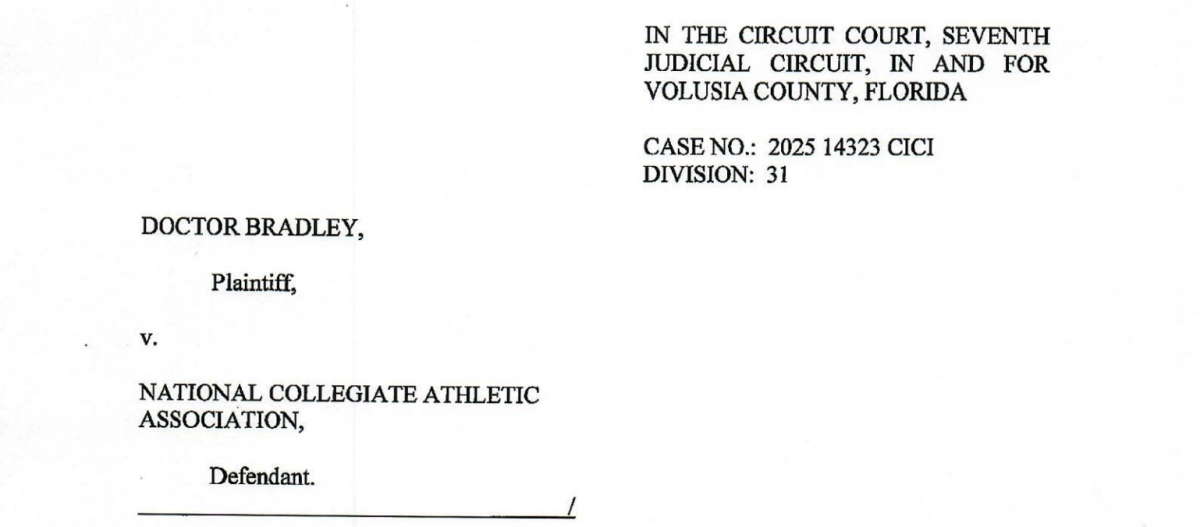
In a significant victory for college athlete rights, the Seventh Judicial Circuit Court of Florida granted a temporary injunction against the NCAA, allowing Bethune-Cookman University basketball player Doctor Bradley to compete for the remainder of the 2025-26 season. The ruling, issued by Judge Dennis Craig, provides a scathing critique of the NCAA’s governance structure and eligibility enforcement process.
Background: A Journey Through Adversity
Doctor Bradley’s collegiate basketball career has been marked by extraordinary challenges that would test anyone’s mental fortitude. After beginning his college career in 2019 with a redshirt year at California State Fullerton and receiving COVID-19 relief like all athletes during the pandemic, Bradley competed at Salt Lake City Community College in 2021-22.
His path took a devastating turn at New Mexico State University during the 2022-23 season when the basketball program was suspended mid-season due to allegations of sexual misconduct by team members. Bradley transferred to Nicholls State for the 2023-24 season, but two weeks before the season began in October 2023, he received notice of a 13-count indictment from New Mexico alleging sexual misconduct, which were charges that he vehemently denied and that were ultimately unsupported by evidence.
The Mental Health Crisis
The indictment’s impact on Bradley was profound and immediate. On the advice of his Licensed Mental Health and Family Therapist, his attorney, and his Nicholls State coach, Bradley withdrew from the basketball team (though not from school) to focus on his mental health and legal defense. The therapist’s clinical notes documented that because of the severity of his mental health state, it was felt that he should not be participating in sports until his mental health improved. Bradley completed forty therapeutic sessions addressing the trauma.
Vindication and Resurrection
Bradley’s legal ordeal finally ended on October 23, 2024, when all thirteen felony charges were dropped. To completely resolve the matter and return to basketball, he accepted a plea agreement for two counts of disorderly conduct (a second-degree misdemeanor under Florida law) with no sanctions other than truthfully testifying if called upon.
In January 2025, Bradley enrolled at the University of Arkansas Pine Bluff and played approximately eighteen games, his first competitive basketball since January 2023. His performance was exceptional, earning him Southwest Conference Defensive Player of the Year honors.
In May 2025, Bethune-Cookman University recruited Bradley and offered him an NIL deal valued at $192,000, contingent on his eligibility to play. The university submitted a waiver request to the NCAA on May 27, 2025, seeking an extension of eligibility based on the extraordinary circumstances that prevented Bradley from playing during the 2023-24 season.
The NCAA’s Denials
Despite comprehensive documentation, including clinical notes from Bradley’s therapist detailing his mental health crisis, a letter from his attorney documenting the emotional trauma and death threats, support from his spiritual advisor, Bradley’s personal statement, letters of support from Bethune-Cookman staff; and a declaration from Head Coach Reginald Theus, the NCAA denied the waiver request on August 12, 2025, and denied the request for reconsideration on November 14, 2025. The NCAA’s rationale? That Bradley’s decision not to play during Fall 2023 was within his control due to “pending legal matters.”
This denial ignored the NCAA’s own rules, which explicitly state that circumstances beyond an athlete’s control include situations clearly supported by contemporaneous medical documentation, which states that a student-athlete is unable to participate in intercollegiate competition as a result of incapacitating physical or mental circumstances.
The Lawsuit and Hearing
On November 19, 2025, Heitner Legal, P.L.L.C. drafted and assisted with the filing of a Verified Complaint on behalf of Bradley in Volusia County Circuit Court, alleging violations of the Florida Antitrust Act and seeking declaratory and injunctive relief. The complaint argued that the NCAA’s denial unreasonably restrained trade in the Division I college athlete labor market, foreclosed Bradley’s access to the NIL marketplace, was applied arbitrarily and capriciously, ignored documented mental health circumstances, and used unproven criminal allegations against Bradley despite their ultimate dismissal.
Judge Craig’s Oral Ruling: Powerful Questions About NCAA Governance
During the hearing, Judge Dennis Craig posed pointed questions that revealed deep skepticism about the NCAA’s governance structure and procedural fairness:
On the Magna Carta and Basic Fairness: Judge Craig asked why the Magna Carta was enacted, drawing a parallel to fundamental principles of justice. He questioned whether the NCAA operates as “the prosecutor, judge, jury, and executioner,” a system that denies athletes the basic protections contemplated by foundational legal principles dating back centuries.
On Athletes’ Lack of Voice: The judge noted that NCAA rules are created with athletes having no say at all. When athletes believe rules aren’t being applied fairly, what recourse do they have? The answer, troublingly, appeared to be that they have none.
On Standing and Timing: Judge Craig observed that athletes cannot even bring waiver requests on their own behalf. They must rely on their institutions. This procedural barrier, combined with the ticking eligibility clock, creates a system where delay works against the athlete. If Bradley’s clock expires before a final hearing, the harm is irreversible.
On the Relevant Market: The Court defined the relevant market as the labor market in Division I NCAA college sports, notably not limiting it to basketball alone. This broader market definition has significant implications for antitrust analysis.
The Written Order: Key Findings
Judge Craig’s written order, signed and entered on January 9, 2026, formalized his findings with equally powerful language. He wrote that there is no adequate remedy at law and that the injury to Bradley outweighs and possible harm to the NCAA. Additionally, he found that Bradley had a likelihood of success on the merits of his antitrust complaint and that the NCAA “is the sole arbiter of who is eligible to compete in college sports, for which, as Defendant contends, athletes have no other recourse.”
What This Means for Future Eligibility Cases
The Bradley decision could have far-reaching implications for NCAA governance and athlete rights.
1. Procedural Due Process Challenges
Judge Craig’s critique of the NCAA operating as “prosecutor, judge, jury, and executioner” with no athlete standing or recourse provides a roadmap for challenging the NCAA’s procedural framework. Future cases may argue that the NCAA’s governance structure violates basic principles of fairness, particularly when:
- Athletes cannot bring their own waiver requests;
- Athletes have no opportunity to directly present their case;
- No record is kept of what factors the committee considers; and
- Athletes have no meaningful avenue to challenge arbitrary decisions.
2. Mental Health as a Protected Category
This case establishes strong precedent that mental health circumstances must be given the same weight as physical injuries when evaluating whether circumstances were beyond an athlete’s control. The Court’s finding that the NCAA ignored its own rules regarding incapacitating physical or mental circumstances may embolden other athletes facing mental health challenges to seek waivers.
3. Criminal Allegations vs. Convictions
The Court’s emphasis that it would be unfair to consider the conduct that was alleged by the prosecutor when those allegations were ultimately unsupported by evidence is particularly significant. This finding suggests that the NCAA cannot rely on accusations alone, especially when those accusations are later withdrawn or disproven.
4. Antitrust Vulnerability
By defining the relevant market as the Division I labor market (not limited to basketball), the Court’s antitrust analysis could extend to NCAA eligibility restrictions across all sports. The finding that denying a waiver forecloses a student athlete from access to the market, which is a restraint provides a template for challenging other NCAA eligibility determinations.
5. NIL Interference Claims
Judge Craig’s observation that the evidence supports tortious interference claims regarding Bradley’s NIL agreement opens a new avenue of attack. As NIL deals become increasingly valuable and explicitly conditioned on eligibility, the NCAA’s eligibility determinations directly impact these contracts, potentially exposing the NCAA to state law tort claims in addition to antitrust liability.
6. Timing as Irreparable Harm
The Court’s focus on the eligibility clock creating irreparable harm provides a powerful argument for expedited relief in future cases. Athletes facing eligibility denials can point to Bradley to argue that the very nature of athletic eligibility, with its strict time limits, requires immediate judicial intervention.
Conclusion
The Bradley case represents more than one athlete’s fight for eligibility. It’s a challenge to the NCAA’s monopolistic control over college athletics and its procedural framework that denies athletes basic fairness protections. Judge Craig’s ruling provides both a legal roadmap and a moral imperative for reform.
As Bradley prepares to take the court for Bethune-Cookman, his case serves as a reminder that behind every eligibility waiver is a human story, often involving trauma, mental health struggles, and circumstances truly beyond the athlete’s control. The question going forward is whether the NCAA will learn from decisions like this and reform its processes, or whether it will continue to face judicial intervention protecting athletes’ rights.
For Doctor Bradley, justice has been served. For college athletes nationwide, this decision may be the beginning of a more fundamental shift in the balance of power between athletes and the institutions that govern them.
Heitner Legal, P.L.L.C. represented Doctor Bradley in this matter. If you are a college athlete facing eligibility challenges or other legal issues, contact us for a consultation.
The information provided in this blog post is for educational and informational purposes only and does not constitute legal advice.